Sharing a living room with pets changes what “comfortable” means. A pale sofa may look calm in a showroom, then collect muddy paw prints after one rainy walk. Loose weaves can snag claws, while deep textures may hold fur in seams. The right upholstery depends on your pet’s habits, your cleaning routine, and how much wear you can accept. No fabric is perfect. A stain-resistant surface may feel warmer or stiffer than expected, and a durable weave can still show scratches.
This guide explores seven materials for pet-friendly living room furniture, including leather, microfiber, tightly woven polyester, canvas, denim, solution-dyed acrylic, and washable cotton blends. The question “What material is best for pet friendly living room furniture” has no single answer. Short-haired pets may leave visible hairs on dark fabric, while claws can catch on some woven surfaces. Small details matter. We’ll compare how each option handles fur, spills, everyday cleaning, and wear, while noting where its advantages have limits. Check the manufacturer’s care instructions, and test a fabric swatch at home if possible. A sample can reveal how the material feels, whether fur brushes away easily, and how it looks in your room’s light. Even then, real life is less tidy than a test.
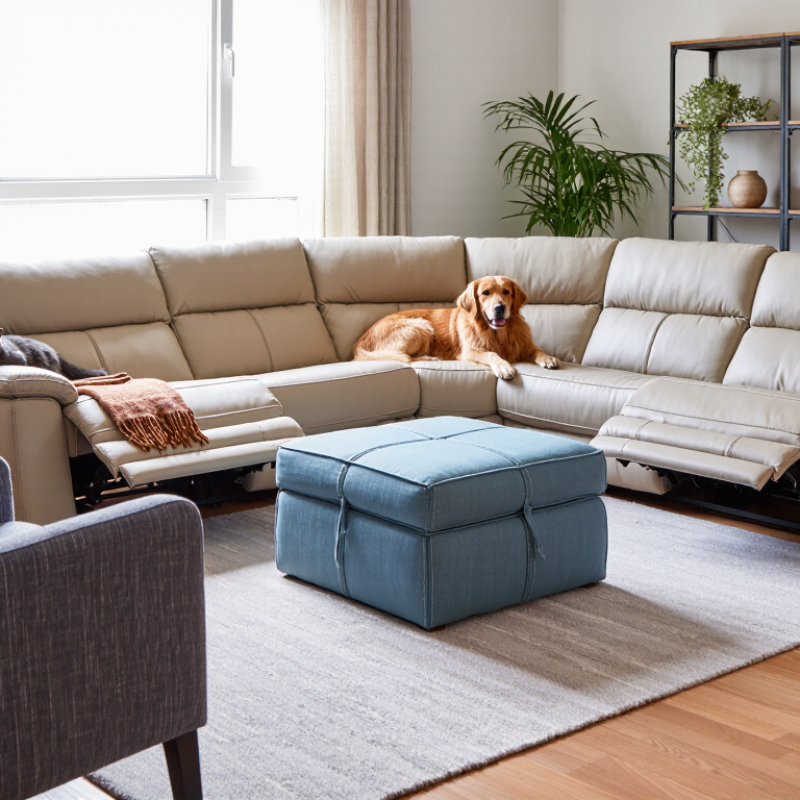
Pets change what “durable” means in a living room. A dog’s claws may snag loose loops, while a cat may treat a sofa arm as a scratching post. Shedding, muddy paws, and occasional accidents also test surfaces in different ways. Choose for your pet’s habits, not just a fabric’s showroom appearance.
Tightly woven polyester and microfiber can be easier to clean than loose, textured upholstery. Canvas and denim offer sturdy weaves, though they may show stains without prompt care. Solution-dyed acrylic resists fading, which helps in sunny rooms, but it is not automatically stain-proof. Leather wipes clean easily, yet claws can leave visible marks. No fabric is invincible. For frames, solid hardwood and metal can handle everyday movement better than weak joints or thin supports. Check the construction, not only the covering.
A heavy shedder may make dark upholstery look dusty within hours; a pale coat can stand out on dark fabric. A washable slipcover can help, but check its fit and washing instructions before buying. Small weave samples are useful: press a fingernail against them and inspect how the threads shift. It is easy to overvalue scratch resistance and forget comfort. If your pet naps on the sofa, a slightly textured fabric may hold hair more stubbornly than a smooth one. That trade-off is real.
In a pet-friendly living room, the best upholstery balances resistance, comfort, and easy care. Look closely at the weave: tightly woven fabrics give claws fewer loops to catch than loose bouclé or open tweed. Microfiber and some performance fabrics are practical choices because their smooth surfaces often release hair and fresh spills more easily. Still, “pet-proof” is rarely literal.
Check cleaning instructions before choosing. Removable, washable covers can help with muddy paw prints, but frequent washing may cause fading or shrinkage. Leather and tightly finished faux leather wipe clean, yet claws can leave visible marks. Color matters, too: a sofa close to your pet’s coat may disguise shedding, while pale fabric can reveal every damp footprint.
Feel the material in person if possible. A fabric sample under a fingernail can reveal snags, and a drop of water can show whether liquid beads or absorbs; test only if the seller permits it. Softness matters. So does airflow, especially in warm rooms. No option avoids every trade-off. A durable fabric may feel less cozy, and a washable cover may wrinkle after drying. Consider your pet’s habits, not just its appearance.
Microfiber is a practical choice for sofas shared with pets. Its dense, short pile gives claws fewer loops to catch, and many small spills can be blotted before they spread. Tightly woven polyester also resists snagging and dries quickly after a damp-paw visit. Check the weave in person; “pet-friendly” labels do not guarantee the same durability.
Solution-dyed acrylic can handle sunlight and repeated cleaning, which helps near bright windows or busy doors. Canvas is sturdy and often washable, though its visible weave may collect fur. Denim offers a tough, casual surface, but seams can attract curious claws. Leather wipes clean easily, yet scratches can remain; it suits households that accept a lived-in finish. No material is claw-proof.
For legs and exposed frames, hardwood is generally more dependable than soft, easily dented wood. Still, a determined chewer can mark almost anything. Look for removable covers, tightly finished seams, and cushions you can flip. Test a fabric sample with a damp cloth and your pet’s fur before committing. I’ve found that fur color matters more than expected: pale hair shows sharply on dark upholstery. It’s an imperfect trade-off. A washable throw can protect favorite resting spots without making the whole room feel covered.
Leather sheds pet hair with a quick wipe, and small spills usually stay on the surface if cleaned promptly. Claws can leave visible marks, especially on soft or distressed finishes. Use a damp cloth and a cleaner approved for the specific leather; harsh products may dry it out. It is easy to wipe, not immune to damage.
Microfiber’s dense pile often resists snagging and releases fur with a lint roller or vacuum upholstery tool. Blot spills rather than rubbing them deeper. Tightly woven polyester also tends to resist everyday stains, though seams can collect hair. Check the care label before using water, since some finishes develop rings. Fur shows.
Canvas and denim are sturdy, familiar choices, but their visible weave can hold hair and crumbs. Brush or vacuum regularly, and treat spills quickly; removable covers make washing easier when the label allows it. Wool feels warm and can disguise light fur, yet loose fibers may attract claws, while stains need gentle, prompt attention. Performance acrylic is often easy to wipe and handles sun well, but texture and cleaning instructions vary. No fabric wins every test. A pale, smooth sofa may look tidy until dark fur lands across it, so match color and weave to your pet’s coat and habits. Cleaning still takes routine.
Match the material to your pet’s habits, not just its appearance. A short-haired cat that naps on the sofa may leave less visible fur on tightly woven microfiber than on loose boucle. Microfiber also handles everyday spills well, though oils and dust still need regular cleaning. Leather wipes clean quickly, but claws can leave marks. It may suit a calm dog better than a kitten that treats furniture as a scratching post. Small detail, big difference. Ask for a fabric swatch and check how fur, water, and a fingernail affect it.
For energetic pets, consider durable canvas, denim, or tightly woven performance fabric. These can resist snagging better than open weaves, but textured claws may still catch them. Washable cotton slipcovers are practical for muddy paws and frequent guests; expect some shrinking or wrinkling unless care instructions say otherwise. Wool blends can feel warm and conceal minor wear, yet cleaning needs vary by construction. Not magic. Think about your routine: Can you remove covers? Do you vacuum often? Does your pet shed heavily or chew seams? There is no perfect material. I once chose a pale, nubby fabric because it looked sturdy, then spent more time picking out fur than enjoying the room. Test your likely match at home before committing.
Tightly woven polyester and microfiber have fewer loops for claws to catch. They are practical, not invincible.
Leather wipes clean easily after muddy paws. Claws may leave visible marks, so expect a lived-in finish.
Solution-dyed acrylic resists fading near bright windows. It is not automatically stain-proof.
Both have sturdy weaves, but fur may collect in the texture. Denim seams can also attract curious claws.
Inspect the frame, joints, and supports, not just the fabric. Solid hardwood and metal are generally dependable choices.
It can protect favorite resting spots. Check the fit and washing instructions; loose covers can be frustrating.
Press a fingernail against a sample and watch for shifting threads. Try a damp cloth and your pet’s fur, too.
Hair often shows more against contrasting fabric. A pale coat can stand out on dark upholstery. It depends.
Not always. A textured fabric may hold hair, while a smoother one may feel less cozy for naps.
Pets can put living room furniture through daily wear, from sharp claws and muddy paws to shed fur, spills, and frequent cleaning. Choosing a durable material means considering more than appearance: look for a tightly woven or smooth surface, resistance to snagging and stains, easy maintenance, and a texture that suits your pet’s habits. What material is best for pet friendly living room furniture depends on the animals in your home, how much they shed, and how your furniture is used.
Performance fabrics, microfiber, leather, faux leather, canvas, denim, and tightly woven synthetic blends each have different strengths. Some release fur easily or wipe clean, while others may better disguise minor marks or offer a comfortable, washable surface. No material is completely scratch-proof, so compare how each handles claws, stains, fur, and routine cleaning. Match your choice to your lifestyle, balancing durability and upkeep with comfort, appearance, and budget.

Lyte Home