A narrow entryway can become chaotic quickly. Shoes collect beside the door, under benches, and near the coat rack. The right cabinet should restore order without making the entrance feel smaller. This guide examines the 2026 best space-saving entryway shoe cabinets for real homes, apartments, and busy family spaces.
The key question is simple: How to choose a entryway shoe cabinet that saves space? Measure the wall, doorway clearance, and available floor depth first. A cabinet measuring 20 to 25 centimeters deep may suit a tight hallway. Flip drawers can hold shoes vertically, while adjustable shelves support boots and larger footwear. Check ventilation, especially when damp shoes enter after rain. A wall-mounted design can leave the floor open for easier cleaning. Anti-tip fittings matter too.
Professional organizer Marie Kondo offers a useful principle: “The essence of effective storage is this: Designate a spot for every last thing you own.” That idea applies directly to shoe cabinets. Each pair needs a clear, practical home. Still, no cabinet solves every problem. A beautiful unit may have weak hinges, cramped compartments, or poor airflow. I have found that daily convenience matters more than appearance alone. Open the drawers with one hand. Test the spacing with your largest shoes. Imagine a wet morning. Small details decide whether the cabinet remains useful after six months. The best choice balances capacity, access, durability, and honest measurements. Sometimes, less storage works better.
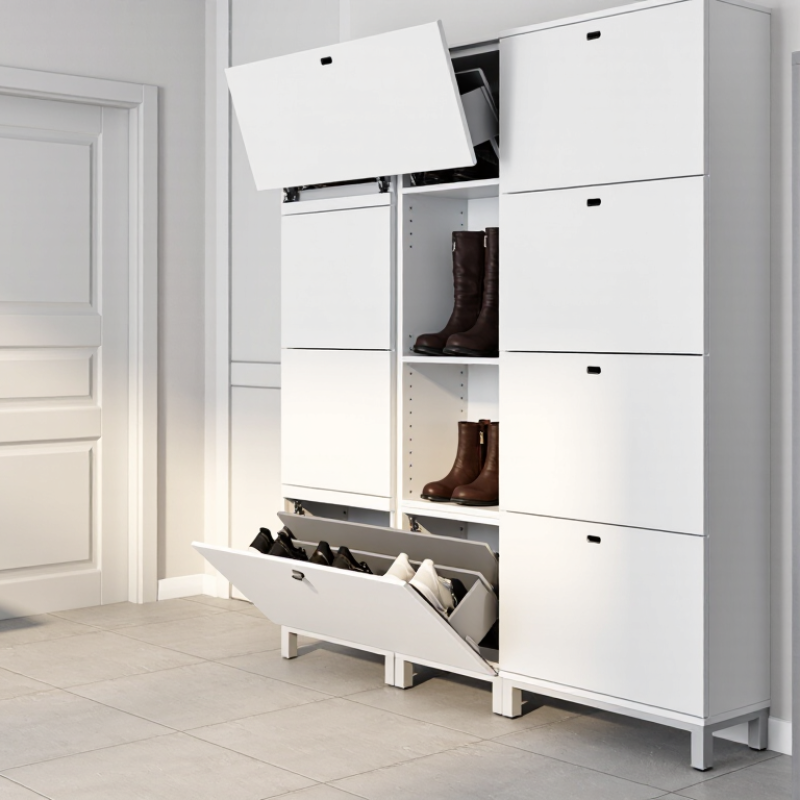
In 2026, an ideal space-saving entryway shoe cabinet does more than hide footwear. It protects walking space, limits clutter, and supports safer daily routines. Measure the available wall area before shopping. A cabinet 20 to 30 centimeters deep can fit narrow hallways without blocking movement. Flip drawers or vertical compartments use height efficiently. Ventilation openings also reduce trapped moisture and unpleasant odors. Small details matter.
Durable construction is equally important. Moisture-resistant panels, smooth edges, and strong hinges help the cabinet survive daily use. Adjustable shelves can hold boots, slippers, and children’s shoes more effectively. A raised base makes cleaning easier and protects the cabinet from wet floors. Stability should not be overlooked. Wall anchoring is useful in homes with children or pets. In my own space-planning experience, I have found that maximum capacity is not always practical. A crowded cabinet becomes difficult to use. I still sometimes underestimate seasonal footwear.
Tips:
Count the shoes used each week. Leave extra space for future purchases. Choose doors that open without hitting nearby furniture. Test the handle height before installation. Keep frequently worn shoes near the top. Place a washable tray underneath wet footwear. Check the cabinet’s weight and fixing method. A slim design can look perfect, yet poor ventilation may create problems later.
A cabinet can look compact online and still block an entryway. Measure before choosing a style or finish. Use a metal tape measure, not a phone app, for dependable readings. Record the opening width, floor-to-ceiling height, and available depth. Measure width at the floor, waist level, and near the top. Walls are rarely perfect. Use the smallest width. Check door swings, trim, switches, and radiator edges. Keep a clear walking path of about 30 to 36 inches. In a narrow hall, even two extra inches matter.
Choose cabinet depth based on your largest everyday shoes, not your smallest pair. Many adult shoes need around 12 inches of internal depth, while boots may need more. Compare the internal measurement with the product’s outside depth. Hinges, doors, and back panels reduce usable space. A tall, slim cabinet can save floor area, but anchor it securely to the wall. Adjustable shelves help accommodate sneakers, sandals, and children’s shoes without wasted gaps. Ventilated panels can reduce trapped moisture after rainy walks.
I once measured only the open floor and forgot the baseboard. The cabinet sat forward and narrowed the passage. It worked, but not elegantly. Recheck the height beneath nearby shelves or hooks. Leave a small installation gap, often about half an inch, for uneven walls. For flip drawers, stand in front and test their opening range with a tape measure. Mark the cabinet outline on the floor with removable tape. Live with it for a day. That simple test can reveal a crowded corner before delivery.
2026 Best Space-Saving Entryway Shoe Cabinets: How to Choose?
Small entryways need vertical thinking, not oversized furniture. The U.S. Census Bureau reported a median new single-family home size of 2,411 square feet in 2023. However, usable entry space can still be narrow, especially in apartments and townhouses. A slim shoe cabinet, measuring 20–25 centimeters deep, preserves walking clearance. Flip-down compartments usually store more footwear than open shelves. Adjustable shelves also handle boots, children’s shoes, and slippers more effectively.
Look for a cabinet between 90 and 120 centimeters high. This height creates storage without blocking wall light or sightlines. Closed doors reduce visual clutter, while ventilation gaps help prevent trapped moisture. Wall-mounted models make floor cleaning easier and create a lighter appearance. The 2024 Freedonia Group report on storage and organization products identifies multifunctionality and efficient space use as continuing consumer priorities. A seat, drawer, or key shelf can therefore add practical value. Still, I would not overfill the cabinet. A beautiful design becomes frustrating when daily shoes cannot fit quickly.
Tips: Measure the door swing, skirting board, and walking path first. Leave at least 75 centimeters for comfortable passage. Count real footwear, not imagined storage needs. Choose sturdy hinges and rounded edges for busy homes. Test one pair of shoes inside before purchasing. This small check may prevent an expensive mistake.
| Shoe Cabinet Design | Typical Width × Depth × Height | Approximate Capacity | Storage Efficiency | Recommended Clearance | Key Space-Saving Features | Best For | Important Limitations |
|---|---|---|---|---|---|---|---|
| Slim Flip-Drawer Cabinet | 23.5–31.5 × 7–10 × 35–45 in (60–80 × 18–25 × 89–114 cm) |
12–18 pairs of adult shoes | ★★★★★ | At least 30 in (76 cm) in front | Tilting compartments store shoes vertically and use very little floor depth. | Narrow hallways, apartments, and small condos | Compartment height may not fit tall boots or oversized footwear. |
| Wall-Mounted Shoe Cabinet | 24–39 × 8–11 × 24–36 in (61–99 × 20–28 × 61–91 cm) |
8–16 pairs of adult shoes | ★★★★★ | Keep the lower edge 4–8 in (10–20 cm) above the floor | Uses vertical wall space and leaves the floor clear for easier cleaning. | Very small entryways and homes needing an open floor area | Requires secure wall anchoring and a suitable wall structure. |
| Open Cubby Bench | 31–48 × 14–18 × 18–20 in (79–122 × 36–46 × 46–51 cm) |
8–12 pairs of adult shoes | ★★★★☆ | Allow 30–36 in (76–91 cm) for comfortable seating access | Combines shoe storage with a seat; open cubbies provide quick access and ventilation. | Family entryways and households that need seating | Uses more floor depth and leaves footwear visible. |
| Tall Vertical Cabinet | 23.5–31.5 × 11–15 × 60–72 in (60–80 × 28–38 × 152–183 cm) |
18–30 pairs of adult shoes | ★★★★☆ | At least 30 in (76 cm) in front; avoid blocking doors or switches | High internal capacity with a small footprint; adjustable shelves improve flexibility. | Small spaces with unused vertical wall height | Can feel visually heavy and should be secured against tipping. |
| Under-Stair Shoe Cabinet | Custom-fit; commonly 24–60 × 12–18 × 24–60 in (61–152 × 30–46 × 61–152 cm) |
10–24 pairs of adult shoes | ★★★★★ | Maintain clear access to the stair route and nearby doors | Converts otherwise difficult triangular or low-height space into concealed storage. | Townhouses and entryways located beneath stairs | Usually needs custom measurements and may have uneven interior heights. |
| Rotating Corner Shoe Tower | 18–24 × 18–24 × 60–72 in (46–61 × 46–61 × 152–183 cm) |
16–24 pairs of adult shoes | ★★★★☆ | Leave approximately 24–30 in (61–76 cm) around the rotating section | Uses corner space efficiently and provides access from multiple sides. | Unused corners in compact entryways or dressing areas | Moving parts need sufficient operating space and may be less suitable for heavy boots. |
| Expandable Modular Cabinet | Each module: 12–24 × 10–14 × 24–36 in (30–61 × 25–36 × 61–91 cm) |
6–12 pairs per module | ★★★★☆ | Follow the manufacturer's assembly and anti-tip clearance requirements | Modules can be stacked, placed side by side, or rearranged as storage needs change. | Renters, growing households, and flexible layouts | Stacked configurations require reliable connectors and wall anchoring. |
| Pull-Out Drawer Shoe Cabinet | 24–36 × 12–16 × 30–42 in (61–91 × 30–41 × 76–107 cm) |
12–20 pairs of adult shoes | ★★★★☆ | Allow 30–36 in (76–91 cm) for drawers to open fully | Full-extension drawers make footwear easy to see while keeping the exterior tidy. | Organized entryways with enough front clearance | Drawer travel requires more open space than a stationary closed cabinet. |
Capacity estimates assume average adult footwear and may vary with shoe size, boot height, shelf spacing, and whether shoes are stored in pairs. For safety, tall or wall-mounted cabinets should be secured to a suitable wall surface.
For a 2026 space-saving entryway shoe cabinet, material choice affects durability, weight, and maintenance. Plywood usually resists repeated assembly better than low-density fiberboard. Solid wood feels durable, but it can be heavy and costly. Powder-coated steel handles moisture well, though its edges need careful finishing. In damp homes, inspect sealed surfaces and metal joints closely. I once underestimated hallway humidity, and swollen panels soon ruined an otherwise practical cabinet.
Measure before comparing features. Record the wall width, door swing, baseboard depth, and walking clearance. Slim flip-down compartments save floor space, but they may fit fewer wide shoes. Adjustable shelves handle boots and children’s footwear more easily. Ventilation gaps reduce trapped odor and moisture. Soft-close hinges are useful near sleeping areas. Small details matter.
Safety deserves more than a product photograph. Choose rounded corners, stable feet, and a cabinet with a stated load limit. Tall or narrow units should include reliable anti-tip hardware. Secure them to a suitable wall structure, following the installation instructions and local safety guidance. Check whether doors stay closed when opened halfway. A loose hinge can turn daily convenience into a hazard. Avoid placing heavy items on top, especially where children can reach them. Test the cabinet after assembly by applying gentle pressure from different sides. It should not rock. If it does, stop and correct the installation rather than trusting appearance.
A space-saving shoe cabinet should fit your entryway, not merely look attractive online. Measure the wall, skirting board, door swing, and walking clearance before comparing designs. Measure twice. A narrow cabinet may save floor space, but shallow shelves can crush larger shoes or boots. Record your tallest footwear and allow a little extra height.
Your household needs should guide the storage layout. Flip-down compartments suit everyday sneakers and slippers, while adjustable shelves handle boots, sandals, and children’s shoes better. Ventilation matters after rain. Look for slatted doors, small air gaps, or removable shelves that are easy to clean. If several people share the cabinet, count pairs honestly. Overcrowding quickly damages hinges and makes daily use frustrating.
Budget decisions involve more than the purchase price. Strong hinges, stable panels, and wall-anchoring hardware usually justify spending slightly more. A very cheap cabinet may require replacement sooner, though expensive materials do not guarantee better design. I once chose a cabinet with excellent capacity but ignored its deep doors. They blocked the hallway when opened. That mistake changed how I judge entryway furniture. Check assembly instructions, load limits, return terms, and cleaning requirements. A secure, moisture-resistant finish is valuable near wet umbrellas and snowy footwear. Leave space for future needs, but avoid buying oversized storage for a problem you do not have.
Compare storage efficiency before choosing a cabinet. The chart uses practical planning examples without brand data. Efficiency is calculated as stored pairs divided by the cabinet’s floor footprint.
A tall narrow cabinet generally provides the highest storage efficiency, while a low bench cabinet uses more floor space but can also provide seating. Measure your available width, depth, door clearance, and walking space before buying.
Choose a cabinet about 20 to 30 centimeters deep. It should preserve a clear walking path. Flip drawers or vertical compartments use wall height efficiently. Small spaces punish bulky furniture.
Measure width, height, and depth with a metal tape measure. Check the floor, waist level, and upper wall. Use the smallest width recorded. Include baseboards, switches, trim, and nearby radiators. Measure twice.
Keep roughly 75 to 90 centimeters of clear passage. Check every door swing before installation. Mark the cabinet outline with removable tape. Leave it there for one day.
Measure your largest regular shoes, not your smallest pair. Many adult shoes need about 30 centimeters of internal depth. Boots may require more room. Outside measurements can be misleading.
Tall, slim cabinets usually save more floor space. Flip-down compartments can hold several pairs efficiently. Adjustable shelves fit boots, slippers, sneakers, and children’s shoes. Do not chase maximum capacity blindly.
Ventilation helps reduce trapped moisture and unpleasant odors. Wet shoes can make a closed cabinet smell stale. Place damp footwear on a washable tray underneath. The detail is easy to overlook.
Look for moisture-resistant panels, smooth edges, and strong hinges. A raised base simplifies floor cleaning. Stable construction matters in busy homes. Wall anchoring adds safety around children and pets.
Keep frequently worn shoes near the top. Test handle height before installation. Confirm doors will not hit furniture. Leave some empty space for seasonal footwear and future purchases. I still underestimate winter boots sometimes.
Choosing a space-saving entryway shoe cabinet in 2026 starts with understanding your available space, daily storage needs, and home style. Measure the entryway’s width, height, and depth, while checking doorways, baseboards, walking paths, and nearby furniture. This helps you select a cabinet that fits comfortably without making the entrance feel crowded. Consider slim vertical units, flip drawers, stackable sections, or wall-mounted designs to maximize capacity in a small area.
When deciding how to choose a entryway shoe cabinet that saves space, compare durability, ventilation, cleaning convenience, and overall safety. Strong engineered wood, metal, or responsibly sourced solid wood can provide reliable support, while adjustable shelves and removable compartments make storage more flexible. Look for smooth edges, stable construction, secure anti-tip features, and doors that open without blocking movement. Finally, balance capacity, quality, appearance, and budget to find a practical cabinet that keeps shoes organized while creating a neat and welcoming entryway.

Lyte Home