How to Style an Empty Corner in a Master Bedroom?

Time:2026-09-11 Author:Liam
0%

An empty corner in a master bedroom can feel unfinished, yet it also offers valuable design potential. Learning How to style an empty corner in a master bedroom starts with observing the room’s light, traffic flow, and existing furniture. A corner beside a window may suit a reading chair, while a darker area could benefit from a slim cabinet or layered lighting. Measure the space before buying anything. Even a beautiful chair can make the room feel crowded when its legs interrupt the walkway.

Keep comfort and proportion in mind. A small upholstered bench, round side table, and warm floor lamp can create a quiet morning spot. Add a woven basket for blankets, or place one tall plant near the wall to introduce height. Choose materials that match the bedroom’s mood, such as oak, linen, rattan, or softly finished metal. Avoid filling the corner simply because it is empty. That approach often creates visual clutter.

Not every idea works.

In practical bedroom styling, safety matters too. Secure tall shelving, hide lamp cords, and leave enough clearance around doors and pathways. Natural light changes throughout the day, so test the arrangement at morning and evening. A corner may look balanced at noon but feel dull after sunset. Small imperfections are useful clues. Perhaps the plant grows unevenly, or the chair is rarely used. Reflect on those details, then adjust the space gradually. The best result usually feels intentional, comfortable, and connected to the room rather than displayed like a showroom.
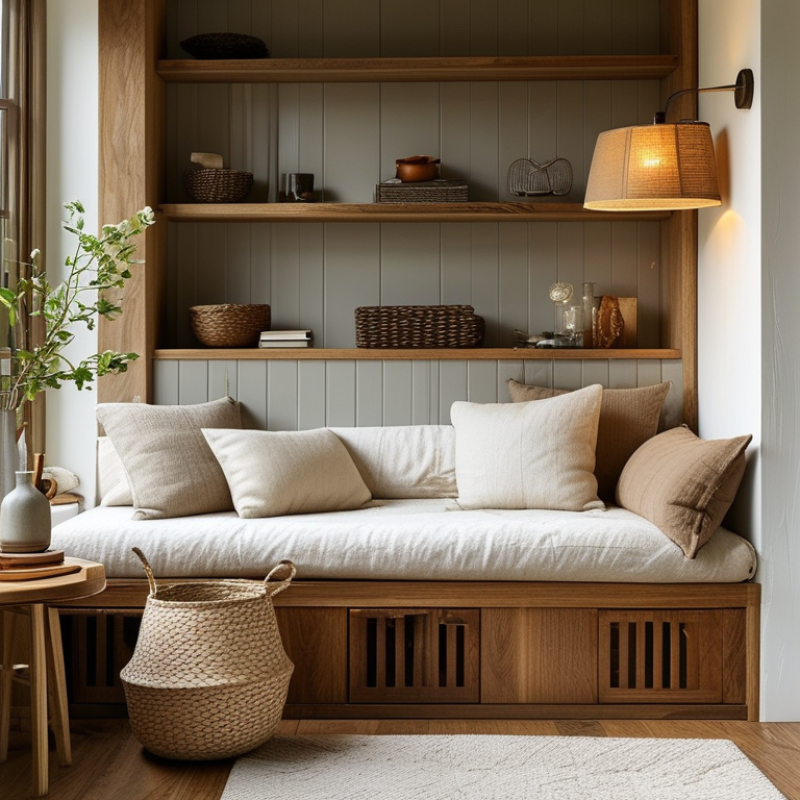
How to Style an Empty Corner in a Master Bedroom?

Assess the Corner’s Function Using a 30–36-Inch Bedroom Clearance Standard

How to Style an Empty Corner in a Master Bedroom?

Assess the corner’s function before choosing furniture. Measure a clear route of 30–36 inches from the bed, door, and wardrobe. The National Kitchen & Bath Association uses 36 inches as a practical passage guideline. This is not a universal bedroom code, but it offers a reliable planning reference. A 30-inch route may work in a compact room. It can feel restrictive beside a swinging door.

Use the corner according to your daily habits. A slim reading chair needs task lighting, a small table, and about 30 inches of movement space. A tall cabinet adds storage, but it may visually crowd the room. The 2021 AARP Home and Community Preferences Survey found that 77% of adults aged 50 and above want to remain in their homes. Flexible layouts matter. Choose lightweight pieces that can move later. I once treated an empty corner as decoration alone. It looked attractive, but the chair blocked the cleaning path.

Tips: Tape the proposed furniture footprint on the floor for two days. Walk around it at night. Open nearby drawers and doors. Keep at least 30 inches clear, and aim for 36 inches where possible. Use a wall-mounted lamp when floor space is limited. Leave the corner partly empty if circulation feels awkward. A beautiful corner that interrupts movement needs reconsideration.

How to Style an Empty Corner in a Master Bedroom?

Assess the corner’s function using a 30–36-inch bedroom clearance standard.

Use 30 inches as a practical minimum for a compact reading, plant, or accent corner, and 36 inches where the corner supports regular circulation or access to storage. Measure the clear floor space after placing furniture, not the overall room dimension.

Select Furniture Scaled to the Corner’s Area and Traffic Pattern

How to Style an Empty Corner in a Master Bedroom?

An empty corner needs furniture that respects both its area and traffic pattern. Measure the corner, then tape the proposed footprint on the floor. Walk around it at night, carrying laundry or opening nearby drawers. This simple test often reveals problems that a beautiful floor plan misses. I once placed a reading chair beside a wardrobe, but its arm blocked the door swing. The corner looked balanced. It performed badly.

Use the room’s circulation as your primary scale guide. The NKBA Planning Guidelines commonly use 36 inches as a comfortable passage benchmark, although bedroom layouts may require adjustment. Keep the main route visually and physically clear. A narrow corner may suit a 24-inch-wide table, a compact lamp, or a vertical cabinet. Larger corners can hold a lounge chair, but leave enough space for movement. Do not fill every empty inch.

The Environmental Protection Agency reports that people spend approximately 90% of their time indoors. That figure supports choosing furniture for daily comfort, not decoration alone. Select pieces with rounded edges near active paths. Keep drawers away from bed clearance. A low bench can work beneath a window, while a deep chair may create a nighttime obstacle. Houzz’s 2024 U.S. Houzz & Home Study also shows continued homeowner investment in private living spaces, yet spending more does not guarantee better planning. Sometimes, the smaller piece works better. Measure again before purchasing.

Layer 2700–3000K Lighting for Reading, Relaxation, and Visual Balance

How to Style an Empty Corner in a Master Bedroom?

An empty bedroom corner can become a quiet reading zone, not a storage mistake. Place a compact armchair about 45–60 centimeters from the wall. Add a small table for a book, water, and a dimmable lamp. Use 2700–3000K light for a warm, restful atmosphere. The Illuminating Engineering Society recommends layered lighting, combining ambient, task, and accent sources for visual comfort. A ceiling fixture provides general illumination, while an adjustable floor lamp directs light onto the page.

Keep the reading lamp near shoulder height when seated. This reduces harsh shadows across the book. Add a soft wall wash or low-glare corner light behind the chair. It creates depth without making the bedroom feel theatrical. The U.S. Department of Energy reports that LED lighting uses at least 75% less energy than incandescent lighting and lasts much longer. Choose warm LEDs with high color rendering, ideally above 90 CRI, so skin, wood, and fabrics appear natural.

Do not over-light the corner.

Test the setup at night. A lamp that feels gentle at 8 p.m. may feel too bright near midnight. I often begin with three light sources, then remove one. Perfect balance is not always comfortable. Leave the switch within reach, and avoid placing the brightest source directly opposite the bed. A slightly imperfect corner can feel more personal than a showroom arrangement.

Anchor the Arrangement with a Rug Extending 18–24 Inches Beyond Furniture

How to Style an Empty Corner in a Master Bedroom?

An empty bedroom corner often feels accidental, even when the furniture is beautiful. A well-sized rug can correct that imbalance. Extend the rug 18–24 inches beyond the bed and nearby furniture. This creates a visual island instead of a floating bed. The proportion also gives your feet a warmer landing beside the mattress. The 2023 Consumer Expenditure Survey from the U.S. Bureau of Labor Statistics shows housing absorbed about one-third of household spending. Thoughtful styling matters when every square foot carries value.

Choose a rug large enough to connect the bed, nightstands, and corner chair. In a spacious room, let the rug continue beneath the front legs of a dresser or bench. Keep the edge clear of doors. I do not always get this right; a beautiful rug can still make a corner feel crowded. Test the layout with painter’s tape first. Texture matters too. A low-pile weave suits rolling doors, while a softer pile adds comfort beside the bed.

Tips: Leave roughly 18–24 inches around visible furniture edges. Measure before shopping. Check the rug’s backing and cleaning instructions. The U.S. Environmental Protection Agency notes that indoor pollutant levels can exceed outdoor levels, so air-cleanable, low-odor materials deserve attention. Avoid choosing only by color. Step into the room at night. The corner may look different then.

Finish with Art and Accessories Following the 60–30–10 Color Ratio

An empty corner in a master bedroom can become a quiet focal point with the 60–30–10 color ratio. Let 60 percent come from the room’s main tone, such as warm ivory on the walls, bedding, and rug. This large visual field keeps the corner calm. Leave breathing space around the furniture.

Use 30 percent for supporting color. A walnut chair, muted clay curtain, or taupe storage cabinet can add depth without making the corner feel crowded. In my own styling work, I found that matching every wood tone looked too controlled. A slight variation felt more natural. It also revealed an uneven edge in the rug, which I chose not to hide completely.

Reserve 10 percent for art and accessories. Hang one medium-sized artwork above the chair, leaving roughly six inches of space. Repeat its accent color in a ceramic bowl, a cushion, or a small framed print. Keep these details at eye level and within easy reach. Add texture through linen, matte pottery, and a softly worn book. Small changes matter.

Do not overfill it.

Before fixing the arrangement, view the corner from the bed. The artwork may look balanced up close but appear too small from across the room. Adjust the scale, lighting, or spacing after living with it for a day. A warm lamp can complete the corner, while one empty surface preserves its restful character.

FAQS

: How do I choose furniture for an empty bedroom corner?

: Measure the corner first. Tape the furniture footprint on the floor. Walk around it at night. Leave the main walking route clear. A narrow corner may need a 24-inch table or slim cabinet. Larger corners can hold a chair. Do not fill every inch.

How can I test whether the furniture blocks movement?

Carry laundry through the room. Open nearby drawers and doors. Check the corner after dark. A chair may look balanced but block a wardrobe door. I have made that mistake. Daily movement matters more than a perfect photograph.

How much walking space should remain around bedroom furniture?

Aim for about 36 inches on the main route when possible. Smaller bedrooms may need adjustments. Keep sharp corners away from active paths. Rounded edges can feel safer near the bed. Recheck the clearance before buying.

What furniture works best in a narrow corner?

Choose a compact table, small lamp, or vertical cabinet. A low bench may fit beneath a window. Avoid deep chairs near nighttime paths. They can become obstacles when the room is dark.

How should I use a rug in the corner?

Let the rug extend about 18 to 24 inches beyond visible furniture. Connect the bed, nightstands, and corner chair when possible. Keep rug edges away from doors. Test the shape with painter’s tape first.

Which rug texture suits a bedroom corner?

Use a low-pile rug near rolling doors. A softer pile feels warmer beside the bed. Check the backing and cleaning instructions. Color alone is not enough. I once chose a beautiful rug that made the corner feel crowded.

How can the 60–30–10 color ratio guide the styling?

Use 60 percent for the main tone, such as warm ivory. Use 30 percent for supporting colors, like walnut or muted clay. Reserve 10 percent for art and small accessories. Slightly different wood tones can feel more natural.

How should I place art and accessories?

Hang one medium artwork above the chair. Leave roughly six inches between the artwork and furniture. Repeat one accent color in a cushion or ceramic bowl. Keep the surface partly empty. Too many details reduce the restful feeling.

How do I check whether the finished corner feels balanced?

View it from the bed, not only nearby. Check the corner in daylight and at night. A warm lamp can improve comfort. Live with the arrangement for one day. You may notice an uneven rug edge or artwork that feels too small.

Conclusion

How to style an empty corner in a master bedroom begins with deciding how the space should function. Consider whether it will serve as a reading nook, a quiet retreat, a storage area, or simply a visual focal point. Keep a clear passage of approximately 30–36 inches so the arrangement feels comfortable and does not interrupt movement. Choose furniture that fits the corner’s dimensions and traffic pattern, such as a compact chair, slim table, bench, or tall accent piece.

Layer warm lighting in the 2700–3000K range to support reading, relaxation, and overall balance. A rug can define the arrangement when it extends about 18–24 inches beyond the furniture. Complete the corner with artwork and carefully selected accessories, using the 60–30–10 color ratio to create a cohesive palette. This approach transforms an overlooked area into a practical, inviting, and visually connected part of the bedroom.

Liam

Liam

Liam is a dedicated marketing professional with a profound expertise in the industry, where he excels at highlighting the unique advantages of our core products. With a keen understanding of market trends and consumer needs, Liam frequently updates our company’s professional blog, providing......