A lift-up ottoman bed can turn an overlooked bedroom floor into practical, hidden storage. This guide explores how to maximize storage with a lift up ottoman bed without making the room feel crowded. The concept is simple: use the space beneath the mattress for bedding, seasonal clothing, shoes, or luggage. However, storage capacity depends on the bed frame, mattress weight, lifting mechanism, and available clearance.
Interior designer and small-space specialist Alexandra Gater offers a useful principle: “Every inch should earn its place.” That idea suits ottoman beds perfectly. A shallow box can hold spare sheets, while deeper sections may accommodate folded blankets or vacuum bags. Keep frequently used items near the opening. Store rarely needed belongings farther inside. Clear plastic containers can improve visibility, but oversized boxes may block the lifting platform.
A successful setup also requires careful measurement. Check the bed’s internal dimensions, floor clearance, and access path before buying storage containers. Do not overload the base. The mechanism may strain, and the mattress could become difficult to lift. Heavy items belong low and near the frame’s strongest areas. Soft bags often work better than rigid cases.
There is room for improvement.
Many people fill every available space, then lose track of their belongings. A simple inventory can prevent that mistake. Leave a small unused area for future needs. Storage should support daily life, not create another chore. With thoughtful organization, a lift-up ottoman bed can provide substantial capacity while preserving a calm, comfortable bedroom.
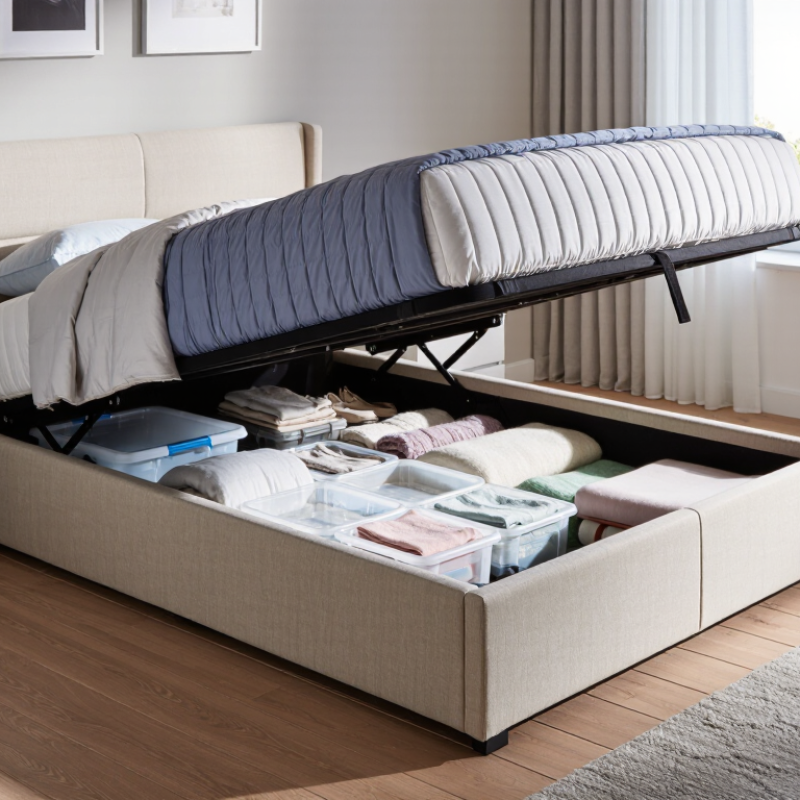
A lift-up ottoman bed turns the unused space beneath a mattress into a practical storage zone. Its hinged platform rises vertically, usually with gas-assisted struts, so the full base becomes accessible. Unlike drawers, it needs no side clearance. That matters in narrow bedrooms. The storage area is often one large compartment. Some frames add a divided base or fabric-lined interior. Check the actual depth, because a tall mattress can reduce usable clearance. Small detail, big difference.
Good storage depends on the lifting hardware, not only the volume. Strong struts should raise the platform smoothly and hold it open without sudden drops. The frame must support the mattress, bedding, and stored items together. Follow the stated weight limits. Overloading can strain hinges and make lifting awkward. Keep heavier boxes near the center. Place seasonal linens in breathable bags, and leave space around the mechanism. Do not force the platform when it feels uneven.
Before buying, measure the room, mattress, stairs, and doorway. The bed may fit the floor but fail during delivery. Look for a rigid base, secure hinges, and a lining that can be cleaned. Ventilation also deserves attention, especially in damp rooms. I would avoid packing the compartment tightly. It is tempting, but dust and trapped moisture can damage textiles. A simple inventory helps: spare blankets, luggage, and rarely used clothing belong inside. Daily items should stay elsewhere. In practice, convenience depends on disciplined packing, and that part is easy to underestimate.
Preparing the bed area properly makes a lift up ottoman bed easier and safer to use. Start by measuring the space around the frame, including the distance needed to lift the mattress. Keep it clear.
Move bedside tables, baskets, and loose cables away from the lifting path. A narrow walkway can make regular access frustrating. I recommend leaving at least 60 centimetres beside the bed when possible. Check the floor too. Uneven flooring may cause the frame to shift during lifting.
Store heavier items near the centre of the base, where weight stays balanced. Place seasonal bedding in fabric bags, and use shallow containers for smaller belongings. Deep boxes can block the lifting mechanism and make items difficult to reach. Label each container clearly. This small step saves time later.
Before loading the compartment, inspect the hinges, support struts, and frame joints. Follow the bed’s weight guidance rather than guessing. Do not force the platform if it feels unusually heavy or uneven. The mechanism may need adjustment. I once filled a storage base too quickly and created an awkward pile that reduced access. It worked, but poorly.
Leave a small gap around the internal lifting hardware. Avoid pressing bags against moving parts. Test the bed several times after organising it. Listen for rubbing, clicking, or sudden resistance. These details can reveal a problem before daily use makes it worse.
How to Maximize Storage with a Lift Up Ottoman Bed?
A lift-up ottoman bed turns unused floor space into a practical storage zone. The organization should follow three rules: size, frequency, and purpose. Place suitcases and spare blankets at the back. They are large and rarely needed. Store folded sheets near the opening, where weekly access feels easier.
This method reflects wider housing preferences. The National Association of Home Builders’ 2024 What Home Buyers Really Want report found that 86% of buyers rated a laundry room essential or desirable, while 81% wanted a walk-in pantry. These figures show a clear demand for dedicated storage. A bed compartment can support that demand, but it cannot replace proper shelving. Use labeled fabric boxes for small items, shallow bags for cables, and one open section for seasonal clothing. Avoid stuffing everything inside. Airflow matters.
Tips: Measure the compartment first. Group belongings by purpose, not only by shape. Keep daily-use items within hand’s reach. Put heavy luggage near the center, if the frame allows it. Check the manufacturer’s weight limit before loading the base. Add a simple inventory card inside the lid. It saves searching later. I once stored winter bedding underneath summer clothes and regretted it during a cold week. The system was logical, but the access order was wrong. Recheck it every season.
Organizing belongings by size, frequency, and purpose
This planning model uses a standard queen-bed footprint of 60 × 80 inches with an estimated 12-inch storage height. The gross capacity is approximately 33.3 cubic feet; allowing 30% clearance for the frame, hinges, and practical access leaves about 23.3 cubic feet of usable storage. Keep frequently used and smaller items near the opening, while bulky seasonal items can occupy the deeper space.
A lift-up ottoman bed can turn unused floor space into practical household storage. The 2024 National Association of Home Builders report identifies storage areas as a high-priority feature for many home buyers. That demand makes the bed base useful, but only when the interior stays organized. Measure the compartment before buying containers. Leave clearance around the lifting mechanism. A crowded base can strain hinges and reduce safe access.
Choose rigid, low-profile containers with fitted lids. Clear sides help you find winter blankets without emptying everything. Soft fabric boxes work well for clothing, but they need breathable panels. Keep heavy books near the center, where the frame usually offers better support. Do not place loose liquids, food, candles, or sharp objects underneath. Small mistakes become annoying quickly.
Protection matters in a closed compartment. The U.S. Environmental Protection Agency recommends indoor relative humidity below 60%, ideally between 30% and 50%, to limit mold risk. Add moisture-absorbing packets, but replace them according to their instructions. Wash and dry fabrics completely before storage. Use cotton covers for quilts, not airtight plastic for long-term fabric storage. Plastic can trap moisture. That part is easy to overlook. The 2023 Self Storage Association Demand Study also shows strong consumer reliance on stored household goods, reinforcing the value of accessible, protected organization. Inspect the compartment every few months. I sometimes label containers too vaguely, so specific labels such as “guest blankets” work better than “bedding.”
| Storage Category | Recommended Container or Method | Typical External Size | Approx. Capacity | Suitable Items | Protection and Space-Saving Practice |
|---|---|---|---|---|---|
| Bedding | Soft fabric storage bag with a breathable panel | 60 × 45 × 25 cm | ≈ 67 L | Sheets, pillowcases, lightweight blankets, and duvet covers | Fold items evenly and avoid overfilling. Use a washable bag to reduce dust while allowing limited airflow. |
| Bulky Seasonal Textiles | Compression bag used with a hand pump | 90 × 65 × 30 cm before compression | ≈ 176 L before compression | Winter duvets, coats, spare quilts, and thick blankets | Only compress completely dry textiles. Leave enough clearance so the bed mechanism can close without pressure. |
| Clothing | Stackable lidded fabric or polypropylene box | 50 × 35 × 25 cm | ≈ 44 L | Off-season clothing, knitwear, jeans, and accessories | Use vertical folding and label each box. Keep clothing off the floor and avoid storing damp garments. |
| Shoes and Bags | Clear lidded shoe boxes or a low divided organizer | 35 × 25 × 18 cm per box | ≈ 16 L each | Shoes, handbags, belts, scarves, and small accessories | Clean and dry footwear before storage. Place shoes in pairs and use dividers to prevent crushing. |
| Books and Documents | Small reinforced archive box with a fitted lid | 40 × 30 × 20 cm | ≈ 24 L | Books, photographs, manuals, and household records | Choose smaller boxes to limit weight. Store documents in folders and keep boxes flat to reduce bending. |
| Fragile Decorations | Rigid plastic box with adjustable dividers | 45 × 30 × 20 cm | ≈ 27 L | Glass ornaments, seasonal decorations, ceramics, and small frames | Wrap each item in acid-free tissue or soft packing material. Do not place heavy objects on top. |
| Bedding Accessories | Small zippered pouch or compartment organizer | 35 × 25 × 15 cm | ≈ 13 L | Mattress protectors, bed skirts, pillow protectors, and spare covers | Group related items together and label the pouch. Avoid airtight storage if the fabric is not fully dry. |
| Small Household Items | Modular bins with handles and removable labels | 30 × 20 × 15 cm | ≈ 9 L | Cables, spare batteries, tools, stationery, and travel items | Use one category per bin and keep frequently used items near the opening side of the bed base. |
| Moisture Protection | Reusable moisture absorber placed beside, not directly on, stored textiles | Container-dependent | Not applicable | Useful for enclosed storage areas with limited air circulation | Check absorbers regularly and replace them according to the instructions. They do not replace dry, clean storage. |
| Bed-Base Safety | Leave a clearance zone around the lifting hardware and frame | Keep contents below the internal frame line | Use available space only | All items stored beneath the lift-up platform | Distribute weight evenly, keep the mechanism unobstructed, and test that the platform closes smoothly before regular use. |
A lift-up ottoman bed saves space only when its mechanism remains reliable. Inspect the gas struts, hinges, and frame connections every three months. Listen for clicking, uneven lifting, or sudden drops. These signs need attention, not wishful thinking. Keep the lifting path clear, especially near the headboard and wall. A trapped blanket can strain the hinges and prevent the base from closing properly.
Use low, breathable storage boxes instead of loose piles. Leave a small air gap around stored items. This helps reduce moisture and makes cleaning easier. Store seasonal bedding at the rear, while daily items stay near the opening. Label each box clearly. It saves time during busy mornings. The National Bed Federation’s consumer guidance places typical mattress life at about seven years, but poor storage can shorten comfort and hygiene much earlier. Vacuum the compartment gently every few months, then check for condensation, dust, or fabric odors.
Do not overload the base. Follow the manufacturer’s stated weight limit, including the mattress. I once treated an ottoman compartment like a spare wardrobe, and the lid became awkward to lift. That was avoidable. The U.S. Consumer Product Safety Commission emphasizes routine furniture inspection and secure operation in household environments. Although its guidance is broader than ottoman beds, the principle applies: loose fittings deserve prompt repair. A yearly professional inspection may be sensible for heavily used beds, especially when children or older adults use the room.
It uses a hinged platform to reveal storage beneath the mattress. Gas-assisted struts usually help lift it smoothly. No side clearance is needed.
The platform rises vertically instead of pulling sideways. This saves space beside the bed. It can work well near walls or tight furniture layouts.
Store spare blankets, suitcases, seasonal clothing, and rarely used linens. Keep daily items elsewhere. Frequent access becomes annoying.
Group items by size, frequency, and purpose. Put large luggage at the back. Keep folded sheets near the opening.
Avoid packing it tightly. Leave space around the lifting mechanism and allow some airflow. Trapped moisture can damage textiles.
Use breathable fabric bags for blankets and clothing. Avoid sealing damp items inside. Check stored textiles each season.
The frame must support the mattress, bedding, and stored belongings together. Follow the stated limit carefully. Heavy boxes should stay near the center.
Measure the room, mattress, doorway, stairs, and delivery route. Check the base, hinges, lining, ventilation, and storage depth. Small measurements matter.
Stop and inspect the load. Do not force the platform. Remove some items and check whether the mechanism is obstructed.
Not really. I once stored winter bedding beneath summer clothes and regretted it during a cold week. Recheck the arrangement seasonally.
How to maximize storage with a lift up ottoman bed begins with understanding how its hinged or hydraulic lifting mechanism reveals the spacious compartment beneath the mattress. Before using this area, clear the floor around the bed, ensure the mattress is properly supported, and leave enough room to lift the frame safely. A tidy access area makes it easier to store and retrieve items without disturbing the rest of the bedroom.
To use the compartment efficiently, organize belongings according to size, frequency of use, and purpose. Place seasonal or rarely needed items toward the back, while keeping daily essentials within easy reach. Soft storage bags, stackable boxes, and low-profile containers can separate categories and make the space easier to manage. Protective covers help shield bedding, clothing, and personal items from dust and moisture. Regularly inspect the lifting mechanism, avoid overloading the compartment, and review stored belongings periodically to maintain smooth operation and an organized storage area.

Lyte Home