Why Prefer Round Dining Tables Over Rectangular Ones?

Time:2026-10-11 Author:Ethan
0%

Why do people prefer round dining tables over rectangular ones? The answer often begins with conversation, movement, and the emotional experience of shared meals. A round tabletop gives every guest a similar visual position. No one sits at an awkward corner. No one feels stranded at the far end.

Interior designer Kit Kemp has said, “A round table makes conversation feel more inclusive.” This principle appears in practical dining design. Guests can see faces clearly, pass dishes more easily, and join discussions without leaning across a long surface. The design also removes sharp corners, which can matter in compact homes with children or narrow walkways.

Industry evidence supports the space argument, although it does not prove that round tables suit everyone. The National Association of Home Builders reported a median new single-family home size of about 2,411 square feet in 2023. Meanwhile, the U.S. Census Bureau recorded an average household size of 2.51 people in 2020. These figures suggest many households need flexible furniture, not oversized dining statements. A circular table can create a clearer circulation path, especially in an open-plan kitchen or a small apartment.

Still, round is not automatically better. A rectangular table may provide more usable surface for large families, laptops, or formal place settings. The evidence remains suggestive rather than conclusive. Room shape, chair clearance, and daily habits matter more than fashion. This guide examines why round tables often feel friendlier, where they save space, and when that preference may be mistaken.
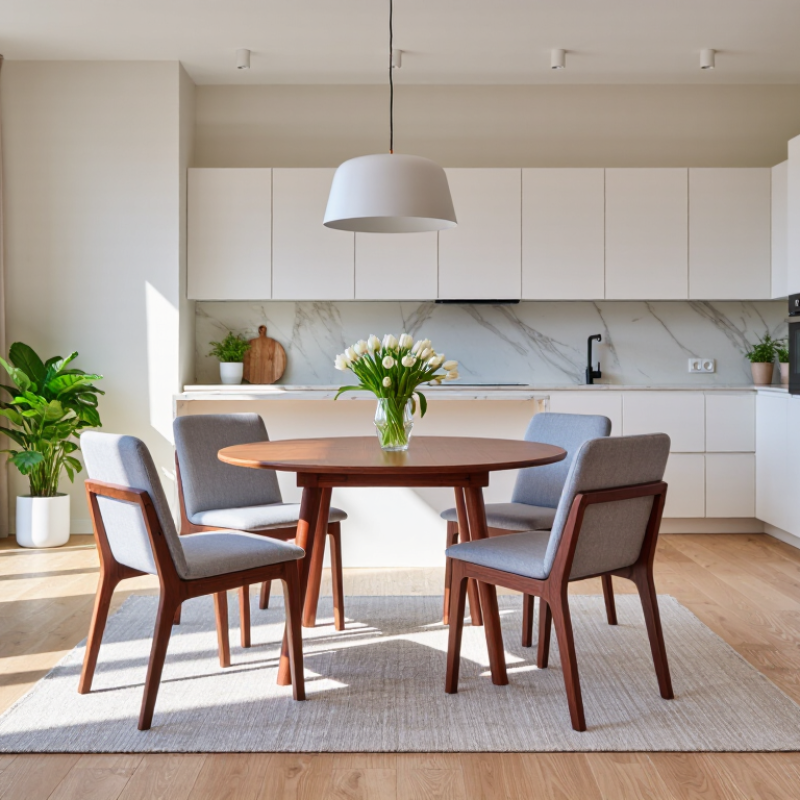
Why Prefer Round Dining Tables Over Rectangular Ones?

Space Efficiency and Flexible Seating in Round Dining Tables

Round dining tables often use limited floor space more efficiently than rectangular designs. Their curved edge removes sharp corners, making movement easier in compact dining areas. A 42-inch round table can seat four people while preserving a clearer walking path around the chairs. The National Kitchen & Bath Association recommends about 36 inches for a comfortable circulation route. That distance matters when a chair is pulled out beside a kitchen counter or doorway. In practical room planning, round tables also reduce awkward corner gaps. Still, round is not magic. A large pedestal can restrict legroom, and the table may feel crowded when serving dishes.

Flexible seating is another strong advantage. Everyone faces the center, so conversations feel more balanced. Guests can shift their chairs slightly without creating a rigid seating grid. This works well for weekday meals, homework, and occasional dinner gatherings. The BIFMA G1-2013 Ergonomics Guideline places typical dining-table height near 28 to 30 inches, supporting comfortable use with standard dining chairs. Pairing that height with a slim pedestal can improve knee clearance. However, measurements should be tested in the actual room. The 2023 global Life at Home report surveyed approximately 37,000 people across 38 markets, highlighting how homes increasingly support several activities. That finding supports adaptable furniture choices, though it does not prove every household needs a round table. Room shape, household size, and serving habits still deserve honest consideration.

Improved Conversation and Social Interaction Around the Table

Why Prefer Round Dining Tables Over Rectangular Ones?

A round dining table helps people connect more naturally during meals. Everyone faces the shared center, instead of speaking across a long gap. No corner blocks eye contact. Guests can notice small gestures, smiles, and changes in expression. These details often keep conversations warm and active. In my experience, quieter guests speak more when they do not sit at the far end. The table feels more balanced. Nobody seems like the “head” of the group.

A round shape also supports smoother social interaction. People can pass dishes without reaching across sharp corners. A central serving bowl becomes easy for everyone to see and share. Design research often links comfortable spacing with longer, more enjoyable conversations. However, the table must still provide enough elbow room. A crowded round table can feel awkward, not welcoming. I sometimes prefer a slightly larger diameter than expected. It leaves room for plates, hands, and spontaneous gestures.

Tips: Choose a diameter that fits both chairs and walking space. Keep the centerpiece low, so faces remain visible. Place shared dishes within easy reach. Test the seating arrangement before hosting guests. A round table is helpful, but it cannot repair poor lighting or uncomfortable chairs. That part is easy to overlook.

Safety, Movement, and Accessibility in Shared Dining Spaces

Round dining tables can make shared dining spaces feel safer and easier to navigate. Without sharp corners, they reduce painful collisions when children, older adults, or servers move between chairs. I have noticed this during busy meals: people turn their bodies less often and pass each other more naturally. That small change matters. Clear pathways still matter more than shape alone.

A circular layout also supports conversation. Guests can see one another without leaning across a corner or twisting their necks. For wheelchair users, an open central base may provide better foot and chair clearance than four table legs. However, not every round table works. A narrow pedestal can block mobility devices, while a heavy edge may limit comfortable reach. Accessibility depends on table height, knee space, floor clearance, and the turning area around each seat. Professional access guidance should inform final measurements.

Movement needs practical testing, not just attractive drawings. Leave enough space for a person using a walker to approach, pause, and leave safely. Keep service routes visible and free from loose bags, cords, and extra chairs. Soft lighting can prevent glare, but overly dim rooms create another hazard. Tactile or high-contrast details may help guests with limited vision. I would test the arrangement with different users before installation. My first layout is rarely perfect. A table that looks spacious on paper can feel crowded during real service.

Comparing Round and Rectangular Tables by Room Size and Layout

Room size should guide the choice between round and rectangular dining tables. In my experience, round tables suit compact rooms with tight walking paths. A 42-inch round table can seat four people comfortably. It leaves more flexible space around the chairs. Round edges also reduce collisions in busy areas, especially near kitchens or hallways. This softer footprint can make a small room feel less crowded. However, round tables need central space. They may feel awkward when pushed against a wall.

Rectangular tables work well in long rooms or open-plan layouts. Their straight edges align naturally with walls, windows, and kitchen islands. A table measuring 60 by 36 inches can seat four to six people. It also creates clear zones for dining and circulation. In my own layout planning, this shape often uses narrow rooms more efficiently. Yet, corners can interrupt movement. Four chairs may also feel cramped if the table sits too close to a wall.

Tips: Measure the room, then mark the table footprint with painter’s tape. Keep about 36 inches for comfortable chair movement. Check door swings and nearby cabinets. Consider daily use, not only guest seating. A round table encourages conversation, but it may not fit every floor plan. I once chose one for a narrow space and underestimated the lost wall clearance. Small mistakes matter.

Choosing the Right Round Dining Table for Household Needs

Why Prefer Round Dining Tables Over Rectangular Ones?

Choosing a round dining table starts with household habits, not room photographs. The U.S. Census Bureau’s 2023 American Community Survey reported an average household size of about 2.5 people. For couples or small families, a 36- to 42-inch table often supports daily meals without overwhelming the room. A 48-inch diameter suits four diners more comfortably. Leave roughly 36 inches between the table edge and walls or furniture. This allows chairs to move without scraping nearby cabinets.

Room shape matters too. In a narrow dining area, a round top can soften corners and improve walking flow. Families with young children may also prefer its lack of sharp corners. Yet larger households need caution. A 60-inch round table can seat six, but it may consume more floor space than a rectangular table with similar capacity. The 2024 National Kitchen & Bath Association Design Trends Report highlights flexible, multifunctional spaces as an ongoing design priority. A table with a pedestal base can support that flexibility, especially when extra chairs appear during holidays.

Choose materials according to real use. Wood handles repeated contact well, while glass shows fingerprints quickly. I would not trust appearance alone. Sit at the table before buying it. Check knee clearance, chair width, and reach across the center. Some households discover that conversation improves, but serving dishes become awkward. That small inconvenience deserves honest consideration.

Why Prefer Round Dining Tables Over Rectangular Ones?

Choosing the right dining table depends on seating capacity, available space, and how easily people can interact during meals. Round tables offer equal access to the center and eliminate sharp corners, while rectangular tables often provide more linear seating for larger households.

The chart compares typical tabletop dimensions used for comfortably seating four, six, or eight people. Round-table measurements show diameter, while rectangular-table measurements show length; both options generally use a tabletop width of approximately 36 inches. Actual capacity may vary with chair width, serving space, and room circulation.

FAQS

Why can a round dining table save floor space?

Its curved edge removes sharp corners and improves movement in compact rooms. A 42-inch table can seat four people while preserving a clearer walking path. Corners disappear. Leave about 36 inches around the table for comfortable circulation.

What table size suits a small household?

A 36- to 42-inch table often suits couples or small families. A 48-inch diameter usually gives four diners more elbow room. Measure the room, not only the tabletop. A beautiful table can still make chairs scrape nearby cabinets.

Can a round table work in a narrow dining area?

Yes, its curved shape can soften tight corners and improve walking flow. Keep roughly 36 inches between the table edge and walls or furniture. Check the doorway and kitchen counter carefully. A drawing may look spacious, but real chairs need extra movement space.

Does a round table improve conversation?

Everyone faces the center, so guests can see one another more easily. People can shift their chairs without following a rigid seating grid. This suits meals, homework, and informal gatherings. Conversation improves. Serving dishes may feel less convenient.

Are round tables safer for children and older adults?

They reduce painful collisions with sharp corners during busy movement. Children, older adults, and servers may pass between chairs more naturally. However, clear pathways matter more than table shape alone. Keep bags, cords, and spare chairs away from walking routes.

Can a round table support wheelchair access?

An open central base may provide better foot and chair clearance. Accessibility depends on table height, knee space, floor clearance, and turning space. Some pedestal designs block mobility devices. Test the table with actual users before installation.

How should I check comfort before buying?

Sit at the table and test knee clearance, chair width, and reach. Typical dining-table height is about 28 to 30 inches. A slim pedestal may improve legroom. Measure twice. Comfort is easy to underestimate.

Which materials are practical for everyday dining?

Wood usually handles repeated contact well and hides minor wear. Glass can show fingerprints quickly and requires frequent cleaning. Choose according to real household habits, not appearance alone. I would test the surface before trusting the photograph.

Conclusion

Why do people prefer round dining tables over rectangular ones? Round tables use space efficiently, especially in compact dining areas, because they eliminate sharp corners and allow people to sit comfortably without being separated by table ends. Their flexible seating arrangement also makes it easier to add or remove chairs when household needs change. With everyone positioned within a similar distance, conversation flows more naturally, encouraging connection and participation during meals, family discussions, and social gatherings.

Round dining tables can also improve movement and accessibility by creating smoother pathways and reducing the risk of bumping into corners. However, the best choice depends on the room’s size, shape, and layout. Rectangular tables may work better in long rooms or for larger households, while round designs suit open, compact, or square spaces. When choosing a round table, households should consider diameter, available walking space, seating capacity, durability, and everyday comfort to find a practical balance between style and function.

Ethan

Ethan

Ethan is a seasoned marketing professional with a deep expertise in our company's innovative product line. With a passion for sharing knowledge and insights, he takes the lead in regularly updating our corporate blog, where he explores industry trends, product features, and effective marketing......